The river view vs plains view camp decision is one of the most consequential accommodation choices you will make for a Masai Mara safari. Camp position does not just affect your view from the tent. It shapes which wildlife you see from the dining area, how quickly you can reach the Mara River crossing sites during migration season, and what the atmosphere of your evenings will feel like.
This guide breaks down what each camp position delivers so you can match your choice to what you actually want from the trip.
What River View Camps Offer
River view camps sit directly on or within a short drive of the Mara River. Well-known properties in this category include Governors’ Camp, Sand River Masai Mara, Entim Camp, Mara Crossings Camp, and several conservancy camps along the Mara North river corridor.
Wildlife from camp
From a river camp, hippo pods are a permanent fixture. You can watch them from a dining deck or tent verandah without leaving camp. Nile crocodiles bask on the river banks and are often visible from sitting areas. During the dry season, elephants and buffalo come to the river at dawn and dusk, sometimes within clear sightline of the main area.
The riverine forest surrounding these camps supports a different cast of animals than the open plains: monkeys, slender mongooses, and an exceptional range of birds. Weavers, malachite kingfishers, pied kingfishers, and African fish eagles are all reliable sightings in riparian vegetation.
Migration season position
During the July to October migration window, proximity to the river becomes a practical factor. When wildebeest herds mass on the bank ahead of a crossing, the tension can build and break quickly. A river camp guide can position your vehicle at the exact crossing site within 10 to 30 minutes. Camps on the open plains typically need 30 to 60 minutes or more to cover the same ground. In a fast-moving crossing event, that time gap matters.
Photography
River camps deliver some of the most technically demanding but rewarding photography in the ecosystem. Crossing action is close, chaotic, and dramatic. Crocodile ambush sequences, wildebeest plunging into the current, and hippos surfacing with calves are all accessible within a short drive. In the late afternoon, light on the water produces reflections and silhouettes that open grassland cannot replicate.
What Plains View Camps Offer
Plains view camps occupy elevated ground or open grassland with wide, unobstructed views across the savannah. Angama Mara sits on the Oloololo Escarpment with a sweeping view over the entire reserve. Mara Plains Camp occupies open Olare Motorogi grassland. Several central reserve camps deliver this same open orientation.
Wildlife from camp
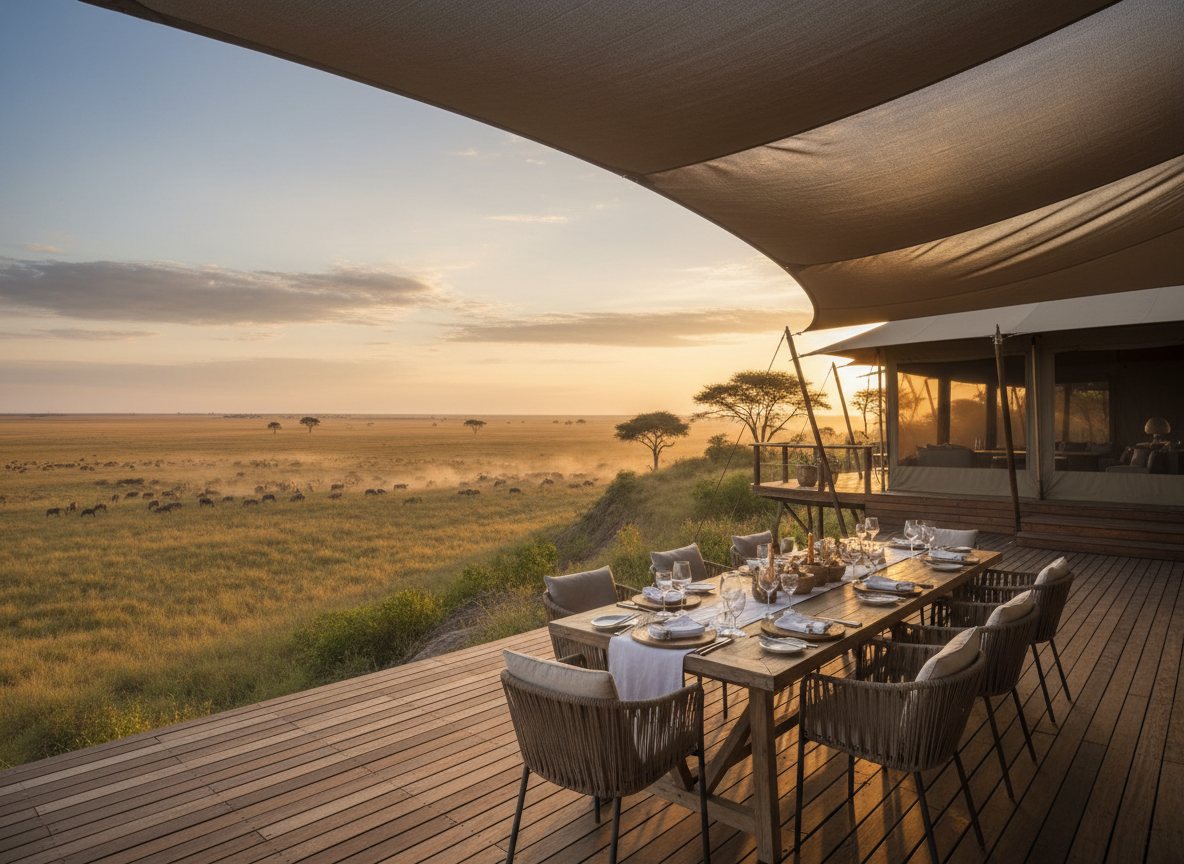
The defining characteristic of a plains camp is visibility. On some mornings, you can watch migration herds grazing from the breakfast table. Lions crossing open ground or cheetahs scanning from termite mounds may be visible without leaving the camp perimeter. The horizon is uninterrupted across 180 to 270 degrees at the best-positioned properties.
Plains camps also offer conditions that river camps cannot: unobstructed dawn and dusk photography, and genuinely dark night skies without tree canopy blocking the view above.
Cheetah sightings
For cheetah, a plains position carries a clear advantage. Cheetahs hunt in open grassland and use elevated termite mounds as scanning points. The river corridor is not their primary habitat. If cheetah sightings are a priority, a plains-positioned camp puts you in the right territory from the start.
River View vs Plains View: Side-by-Side Comparison
| Factor | River View Camp | Plains View Camp |
|---|---|---|
| Migration crossing proximity | 10-30 min | 30-60+ min |
| Hippo viewing from camp | Outstanding | Rare |
| Crocodile viewing | From camp | Rare |
| Cheetah sightings | Good | Outstanding |
| Panoramic dawn/dusk views | Partial (riverine trees) | Full, unobstructed |
| Night sky photography | Limited by canopy | Excellent |
| Wildlife sounds at camp | River, hippos, birds | Plains calls, distant lion |
| Big cat sightings overall | Very good | Excellent |
| Elephant at water | Excellent | Moderate |
| Bird diversity | High, riparian species | Good, open-country species |
Which Position Suits Your Safari?
Choose a river view camp if:
- You are visiting between July and October and Mara River crossings are the central experience you came for
- Watching hippos and crocodiles from within camp is on your list
- Elephants at the river at dawn and dusk are important to you
- The atmosphere of a forested river setting appeals more than open grassland
Choose a plains view camp if:
- Sunrise and sunset over open savannah is the defining image you want
- Cheetah sightings are a wildlife priority
- Wide, unobstructed views from your tent and dining area matter
- Escarpment positions and elevated landscape photography interest you
- Night sky conditions are part of your photography plans
The combined approach
If your stay runs to five nights or more, splitting time between a river camp and a plains or escarpment camp is a practical option worth considering. A few nights at the river during peak migration season covers crossing access; the remaining nights on the plains deliver big cat territory and landscape light. The two environments are different enough that the contrast adds genuine depth to the trip rather than feeling repetitive.
Explorer Notes
The migration crossing window is not uniform across the July to October period. Early July often sees herds building on the Serengeti side with initial crossings near Sand River. Peak activity at the main Mara River sites tends to fall between late July and September. By October, herds begin moving south again. If crossings are your primary focus, mid-August to mid-September typically offers the highest concentration of activity.
Both camp types support full game drives across the wider ecosystem. Camp position shapes what you see without leaving and your response time to river events. It does not restrict which animals you can find once you are out on drive.
Conservancy camps, whether river-side or plains-based, operate under lower vehicle density rules than the central reserve. If crowd-free game viewing matters as much as the view from your tent, factor conservancy versus reserve access into your decision alongside camp position.
Choosing With Confidence
The river view vs plains view camp question has no universal right answer. It depends on when you are traveling, which wildlife encounters matter most, and what atmosphere you want the camp itself to carry. A river camp during migration season is hard to argue against for crossing proximity. A plains camp wins on cheetah territory, open-sky photography, and panoramic atmosphere throughout the year.
Knowing what each position delivers in concrete terms makes the decision straightforward rather than speculative.
Have questions about this itinerary or destination? Get answers from a safari specialist before you commit.
Inquire More